Research program · Fraud and risk AI

Shared fraud intelligence for lenders who can't share data.

Credit unions and community banks face the same synthetic identity and bust-out fraud as the largest banks, with a fraction of the data to fight it. I am building a way for small lenders to detect fraud together without any member data leaving their own systems.

In active research · Now inviting pilot partners

The problem

Fraud rings go where the data is thinnest.

A lender with a few hundred thousand members may see only a handful of confirmed synthetic identity cases a month. That is too few to train an accurate model, so most small institutions rely on rules and manual review that miss new schemes and slow down good applicants.

Pooling data with peers would fix the volume problem, but privacy law and member trust make sharing raw records a non-starter. Organized rings exploit the gap by moving from one small institution to the next, knowing no single lender can see the pattern.

The approach

Train together. Keep data home.

Each institution trains a fraud model on its own systems. Only encrypted model updates leave the building, and they are combined into a shared model that every participant benefits from. No member records are pooled, copied or exposed.

Standard federated learning breaks down on fraud, where confirmed cases are extremely rare and every lender's members and data look different. The research is focused on making it work under exactly those conditions.

Each lender trains locally and sends only encrypted model updates to a shared model, which sends improved detection back to every lender Shared model UPDATES ONLY, NO RECORDS encrypted update encrypted update better detection Credit union Atrains locallymember data stays Community bank Btrains locallymember data stays Credit union Ctrains locallymember data stays
Illustrative architecture. Participants share model updates, never member records.

Research focus

The hard problems I am working on.

Each one is an open technical question. Together they decide whether small lenders can match the fraud detection of the largest institutions.

01

Rare-event federated learning

Getting a shared model to catch fraud that makes up well under one percent of applications, without drifting toward the largest participants and missing patterns at smaller ones.

Class imbalance · Personalized models · Fraud capture at fixed false-positive rates
02

Private cross-lender identity signals

Flagging when the same synthetic identity, or a near variant of it, applies at several institutions at once, without revealing who the applicant is.

Privacy-preserving record linkage · Fuzzy matching · Synthetic identity
03

Privacy without losing the signal

Measuring how much detection survives formal privacy protections, and directing that protection where it costs the least accuracy on rare cases.

Differential privacy · Privacy budgets · Detection tradeoffs
04

Resilience to bad participants

Limiting the influence any single institution can have on the shared model, so poor or manipulated updates can't corrupt it.

Robust aggregation · Poisoning resistance · Participant quality

Who it's for

Built for lean fraud teams at small lenders.

Credit unionsInstitutions with a small fraud and risk team that need detection on par with the largest issuers.
Community banksLenders seeing rising synthetic identity and bust-out losses with too little history to model them alone.
CUSOs and core providersPartners who serve many institutions and want to offer shared fraud protection across their network.
Compliance teamsLeaders who need fraud collaboration that holds up to privacy and regulatory review.
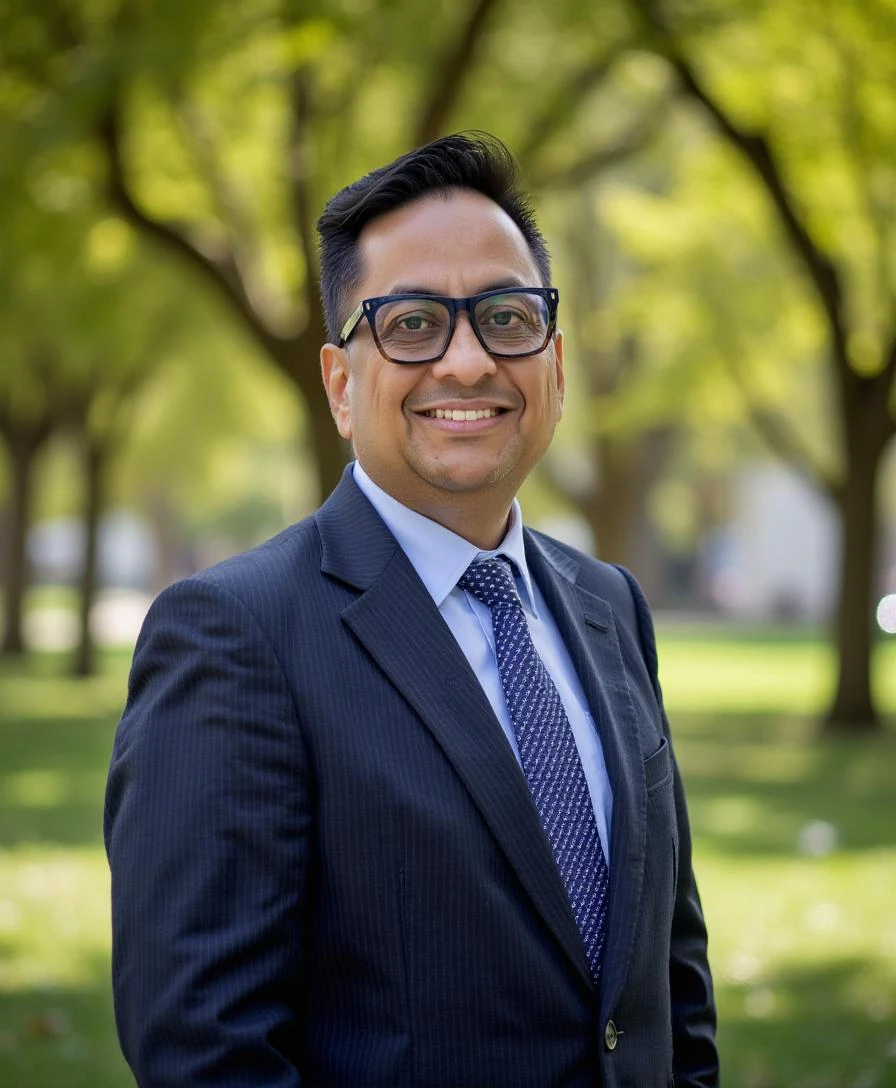
Atul Mohan

Background

A practitioner's view of fraud and credit risk.

This program grew out of a pattern I saw again and again: the institutions most exposed to fraud are the ones with the least data to fight it.

I have worked hands-on in fraud and credit-risk analytics at American Express, Citi, Vanguard and Teachers Federal Credit Union, covering first-party and bust-out fraud, synthetic identity, account takeover and application fraud, and the tradeoff between fraud capture and false positives. At American Express, I built a global data science team from zero to 32 people across four markets.

Ph.D.Data Analytics, Science & Engineering · Princeton University
MBAStrategy & Marketing · University of Michigan (Ross)
Fraud & riskAmerican Express · Citi · Vanguard · Teachers FCU
Pilot partners

Help shape the research.

I am looking for a small group of credit unions, community banks and industry partners to advise on the research and take part in an early pilot. Participation starts with a conversation, and no member data is shared at any stage.

I will receive your note directly through the site.

Talk about a pilot